NASA recently released new pictures of Jupiter, the largest planet in our solar system. The photos were taken by the Juno spacecraft. Many of the black-and-white images, sent back to Earth by Juno, have been colourized by people to better show the clouds swirling around the planet. The Juno spacecraft was launched in 2011. Its mission was “to examine Jupiter’s chemistry, atmosphere, interior structure and magnetosophere,” according to a NASA website. Juno arrived at Jupiter in 2016, looking for “clues to its origin and evolution.” Since that time, it has been orbiting (flying around) Jupiter, taking pictures and sending them digitally back to Earth.
Other News
North And South Korea: Lasting Peace May Be Near
It was one step, but it represented the possibility of lasting peace for North and South Korea.
Kim Jong-Un, the leader of North Korea, walked to the border between his country and South Korea … and stepped over it, into South Korea.
There, he shook hands with South Korean leader Moon Jae-in.
It was a joining together not just of two leaders, but of two countries that have been at war for 65 years.
The Korean War began on June 25, 1950 and, although fighting ended in 1953 (when an armistice* was declared), no peace treaty was signed by both countries. Officially the two countries remained at war.
Canada to Lead Trade Missions for Women, LGBTQI, Indigenous Businesses
The Canadian government is going to help businesses owned by women, Indigenous peoples, and LGBTQI people (LGBTQI means lesbian, gay, bisexual, transgender, queer or questioning and intersex people).
The government will create “trade missions” to support their businesses.
A trade mission is when one country — in this case Canada — travels to another country in order to talk about increasing the amount of business between the two countries.
Typically, business owners and government officials go to another country, and meet with business owners and government officials there. They discuss ways the countries can work together.
Facebook CEO Answering Tough Questions From US Government
Mark Zuckerberg, the high-profile creator and CEO of social media website Facebook, is being asked a lot of tough questions by the US government.
US Senators were asking him how Facebook uses the personal information it collects on people who use the popular social media website.
When people join Facebook and use it, they provide lots of information on themselves. Companies pay to use that information when they post advertisements.
If they have information about a person — for instance, whether they have kids, or where they like to go on holiday — they can do a better job targetting ads at them. That makes the person more likely to buy the product that’s being advertised.
That’s only one way companies use people’s personal information. Other people, who may be less honest, can sometimes use personal information to try to take advantage of people.
How Much Food Do You Waste?
If all the food that’s thrown away in three American cities could be saved, it would provide 68 million meals for people who don’t have enough to eat, according to a recent study.
A team of researchers in the United States spent a week looking through the garbage bags of 1,151 people living in Denver, New York and Nashville. The researchers wanted to know what kind of food was being thrown away, how much there was, and why it was being tossed.
By asking these questions, the researchers hoped to find ways to reduce the amount of food we throw away, and to give some of that food to people who need it.
The researchers found that, in the cities they surveyed, more than a kilogram of edible food per person is wasted each week. (Edible food is food you can eat. It doesn’t include things like apple cores, egg shells, or bones from meat.)
Fruits and vegetables were the most common edible foods found in the trash, followed by food leftover from meals. Eggs, bread and milk were also commonly thrown out.

“Adventure” Playgrounds Can Build Confidence
At a place called The Land, in Wrexham, Wales, the ground is littered with pieces of wood, old tires, packing crates, and shopping carts. It looks like a junkyard, but it isn’t. It’s a playground.
There’s also a fire pit, hammers and saws, and a rope swing across a creek. Some of the equipment can be dangerous, but the people who run the playground believe that letting children take some risks is good for them.
The Land was created by Claire Griffiths, who has two children of her own. She wanted to build a space where children could play the way they wanted and experiment with different things, without a lot of rules.
Students March “For Our Lives”
Young people in more than 800 cities in the United States and around the world took to the streets last Saturday to protest.
It was called “The March for our Lives.” The students were protesting for “gun control” which in this case means they want stricter gun laws in the United States.
Canada’s gun laws are different than in the United States, in terms of when and how someone can buy a gun. Canada has “fairly strict gun laws,” according to a recent article in The Walrus magazine. Canada has “detailed licensing procedures, age restrictions, and background checks required before you can purchase a firearm.”
The students want politicians in the United States to make it harder for people to buy guns. They say that will make everyone safer.
(Grades 4-6 Science and Language Arts) “How Much Food do you waste?”
ACTIVITY FOR GRADES 4-6 Based on TKN article: “How Much Food Do You Waste?” by Monique Conrad In-Class Activity by Pauline Olthof-Youn SCIENCE/MATH, GRADES 4-6 Teacher brings in a fruit or vegetable, bread, butter close to best-before date Date is […]
Scientist Stephen Hawking Dead At Age 76
When we think of scientific geniuses, we may think of Albert Einstein, Marie Curie or Ada Lovelace. Stephen Hawking was right up there with the most brilliant minds of any generation. He passed away last week, at the age of 76.
It would take a book — or a movie (there are both) — to even scratch the surface of his accomplishments, his tremendous sense of humour, his influence on millions of people and the vast depths of his knowledge.
He helped the world better understand black holes and string theory. Black holes are extremely dense regions in space. We can’t see them. In fact, we can understand what they are only by how they affect things around them. Hawking furthered our understanding of them and many other areas of physics. His groundbreaking work changed science forever.
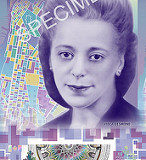
Q&A About Canada’s New $10 Bill Featuring Viola Desmond
Teaching Kids News asked the communications representative at the Bank of Canada a few questions about the new Viola Desmond $10 bill, its security features and about future bank notes. Their answers include some fascinating information about the country’s bank-note […]